> For the complete documentation index, see [llms.txt](https://docs.chainbot.io/llms.txt). Markdown versions of documentation pages are available by appending `.md` to page URLs; this page is available as [Markdown](https://docs.chainbot.io/zh/basic-usage/notify-channels/telegram.md).
# Telegram
## Telegram 推送类型
1. [User(消息发送给个人用户)](#ru-he-she-zhi-user)
2. [Group(消息发送给群组)](#ru-he-she-zhi-group)
3. [Channel](#ru-he-she-zhi-channel-qu-dao)[(消息发送给频道)](#ru-he-she-zhi-channel)
4. [Bot(创建自己品牌的 TG Bot)](#ru-he-she-zhi-bot)
对于 1 User、2 Group、3 Channel 类型的推送消息都由 ChainBot 的官方 [Telegram Bot](https://t.me/chainbot_bot) 推送。
对于4 Bot,您可以配置属于自己品牌的 TG Bot,以便将自己的 Bot 传播出去给更多的个人、群组和频道使用。
### 如何设置 User?
1. 选择Chat Type为User。
2. 点击Get Chat ID跳转到 Telegram 的软件。
3. 选择 "Start" 后,将会收到一条 ChainBot 发送的一条消息,消息内容中包含 Chat ID。
4. 复制 Chat ID 填写到 ChainBot 平台即可。

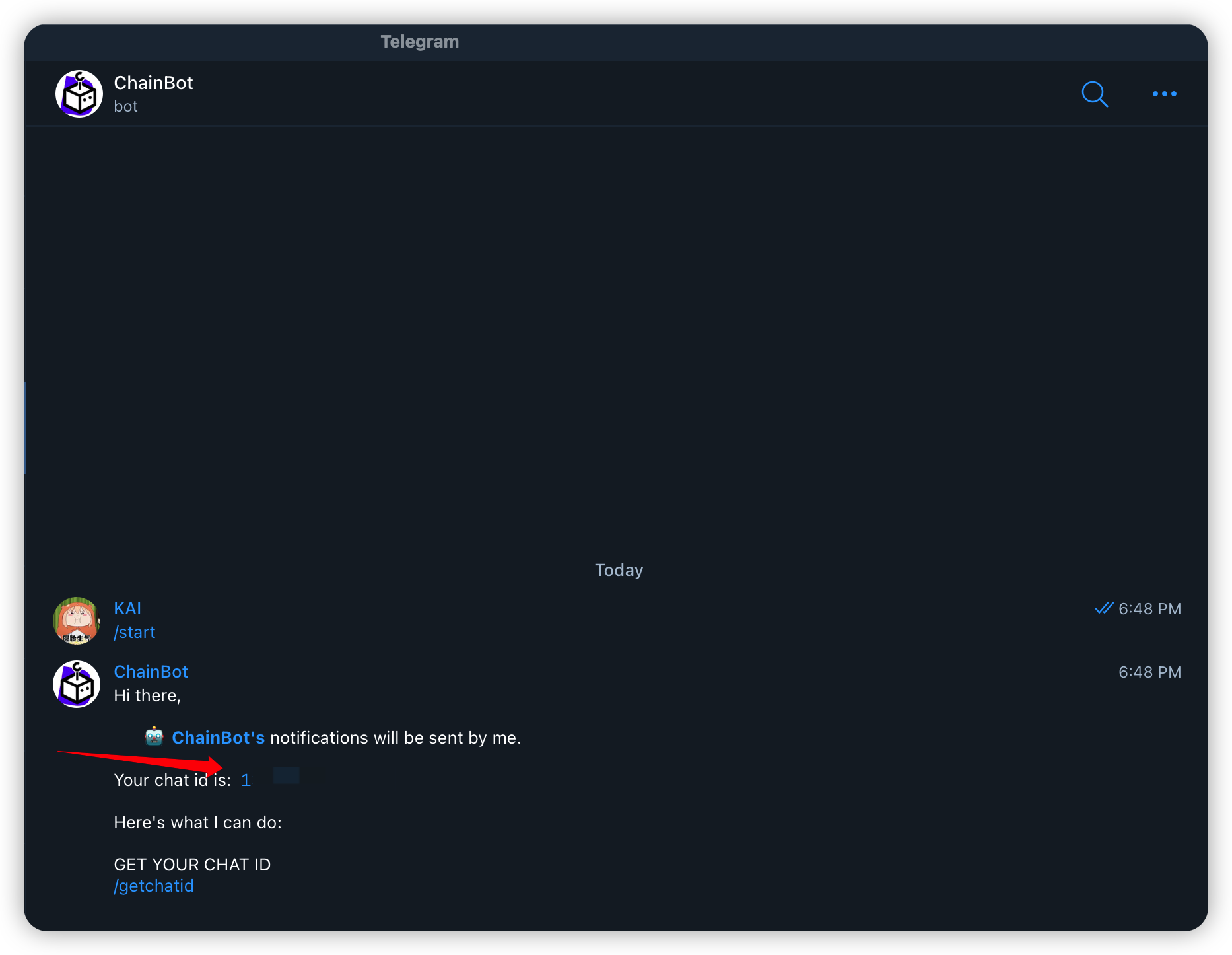
Got your Chat ID
 ### 如何设置 Group?
1. 选择Chat Type为Group。
2. 将Chainbot机器人拉入到Group。
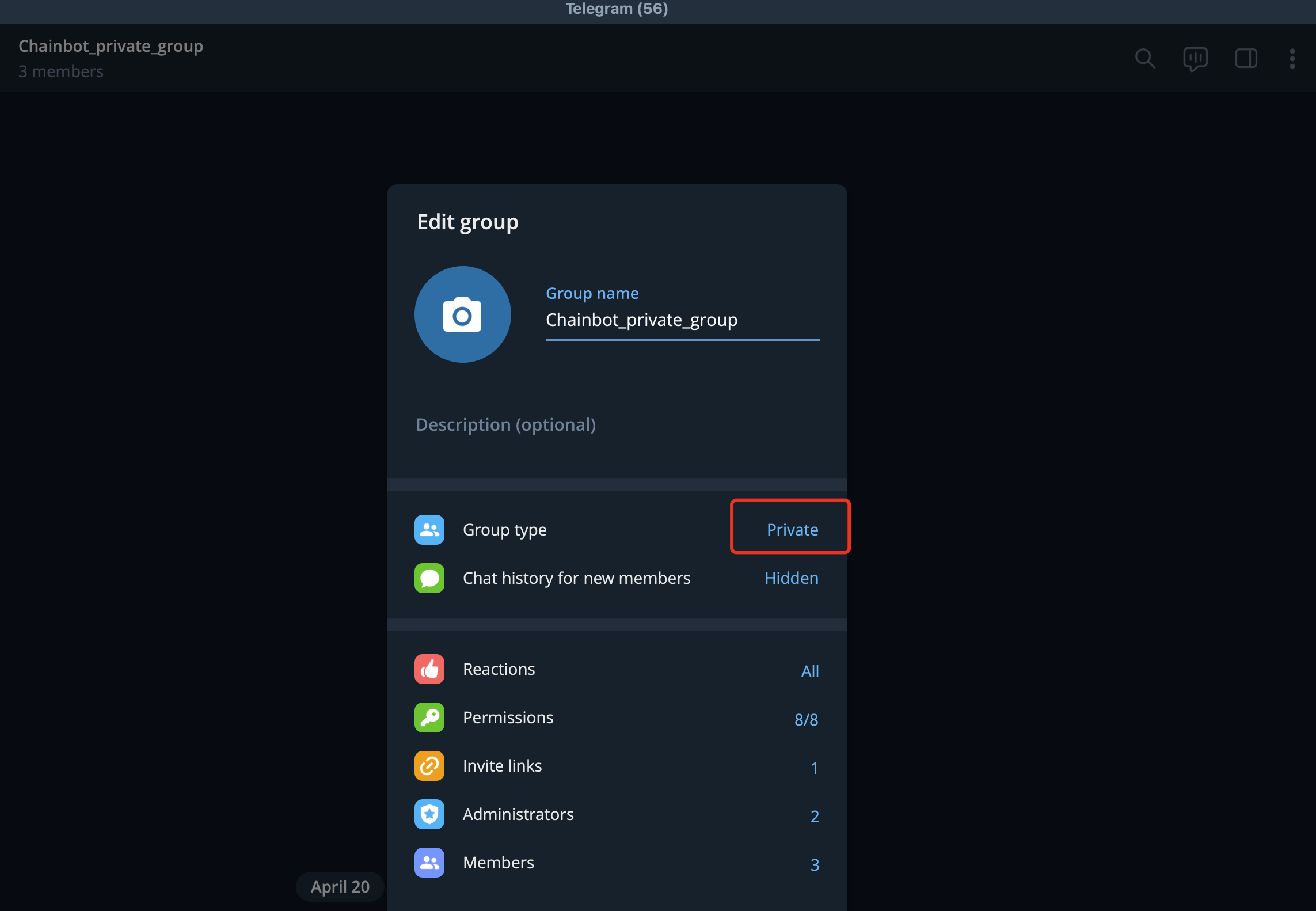
3. Group分为\*\*Private(私有)和Public(公开)\*\*两类, 首先确认Group的类型。
4. 如果是Private(私有) Group, 需要填写**带负号的Chat ID,** 如 -123456。
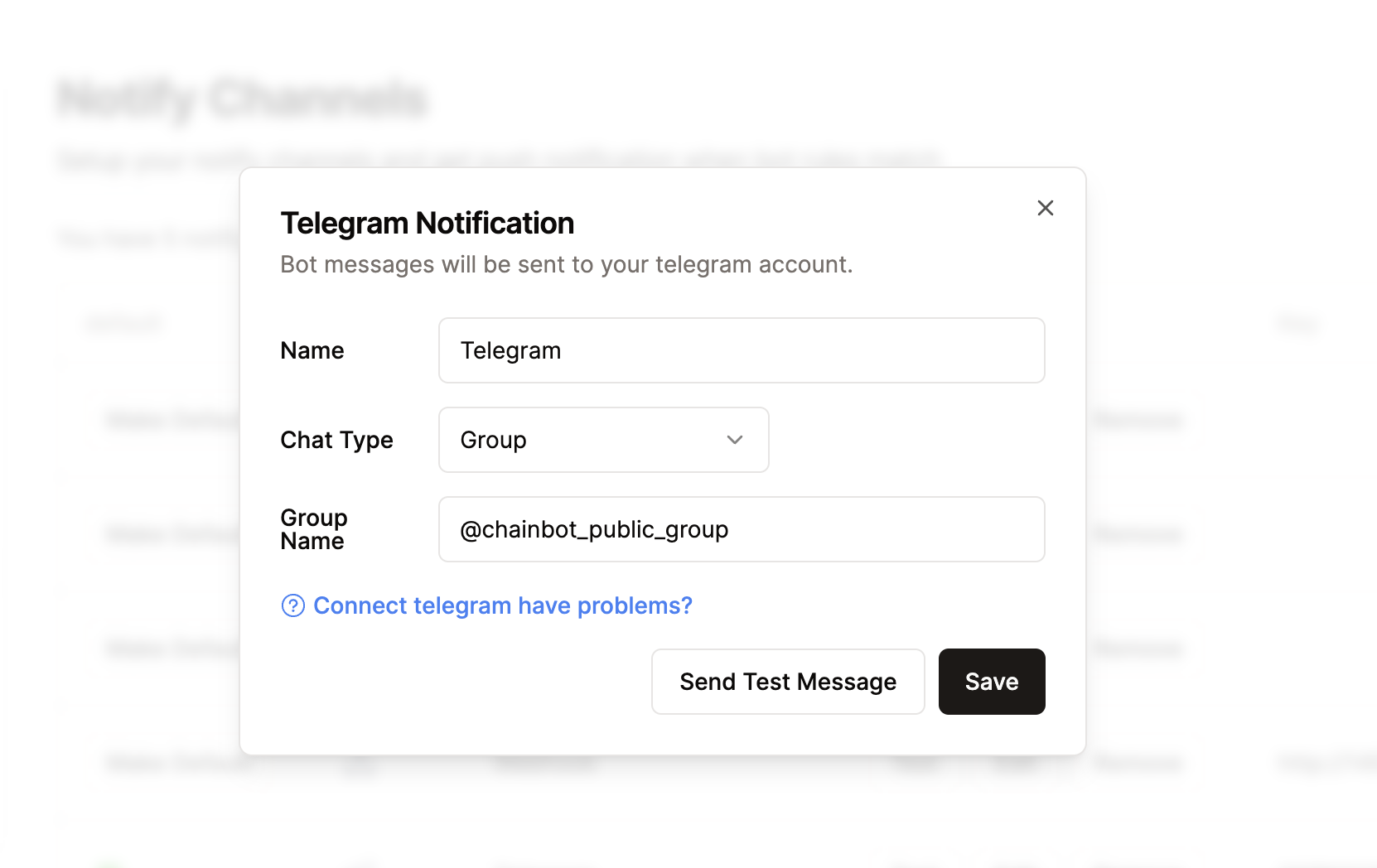
5. 如果是Public(公开) Group, 需要填写带\*\*@符号的Group Name,\*\* 如 @chainbot\_group。
6. 复制带负号的Chat ID 或带@符号的Group Name, 填写到 ChainBot 平台即可。
#### 将Chainbot机器人拉入到Group
### 如何设置 Group?
1. 选择Chat Type为Group。
2. 将Chainbot机器人拉入到Group。
3. Group分为\*\*Private(私有)和Public(公开)\*\*两类, 首先确认Group的类型。
4. 如果是Private(私有) Group, 需要填写**带负号的Chat ID,** 如 -123456。
5. 如果是Public(公开) Group, 需要填写带\*\*@符号的Group Name,\*\* 如 @chainbot\_group。
6. 复制带负号的Chat ID 或带@符号的Group Name, 填写到 ChainBot 平台即可。
#### 将Chainbot机器人拉入到Group
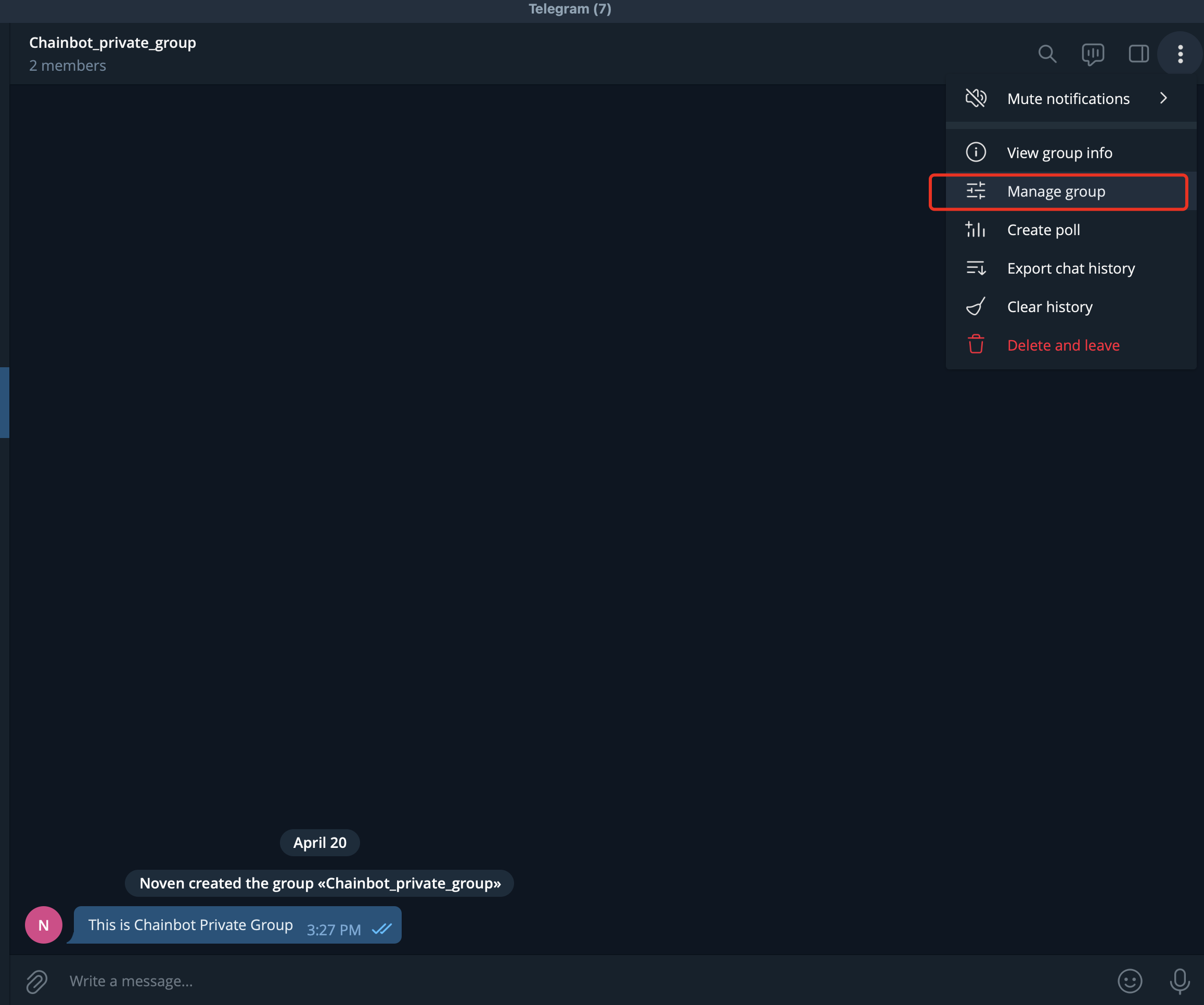
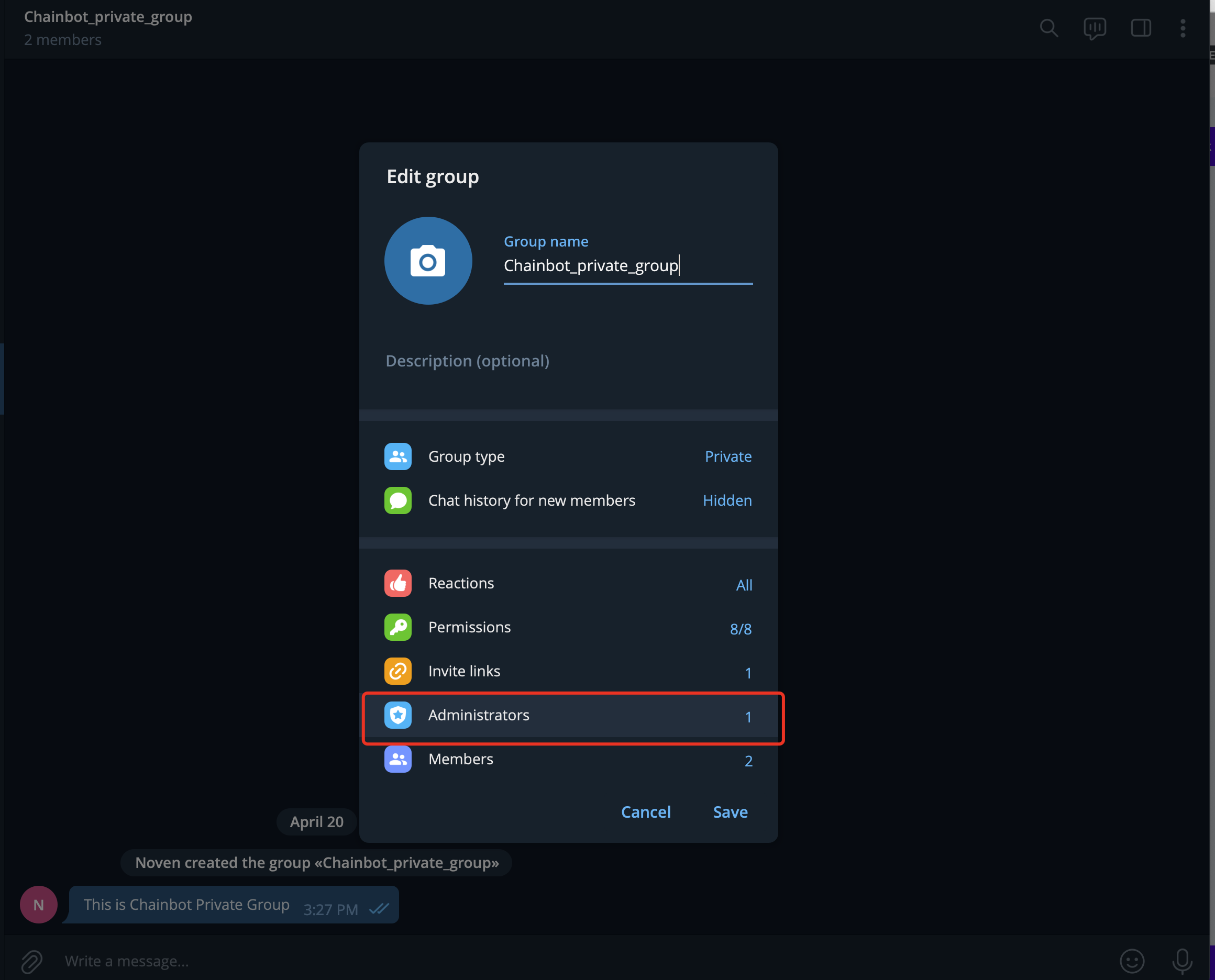
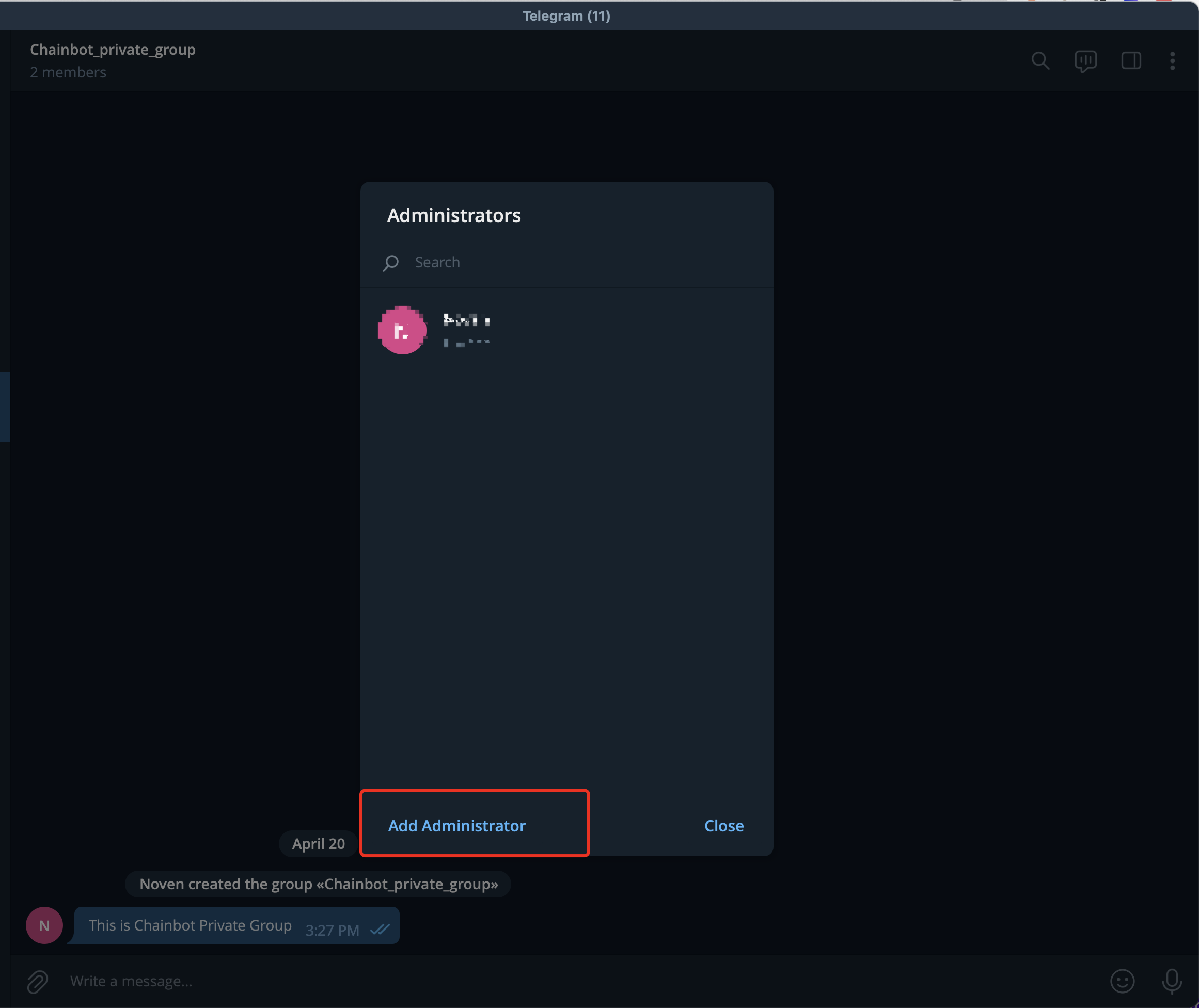
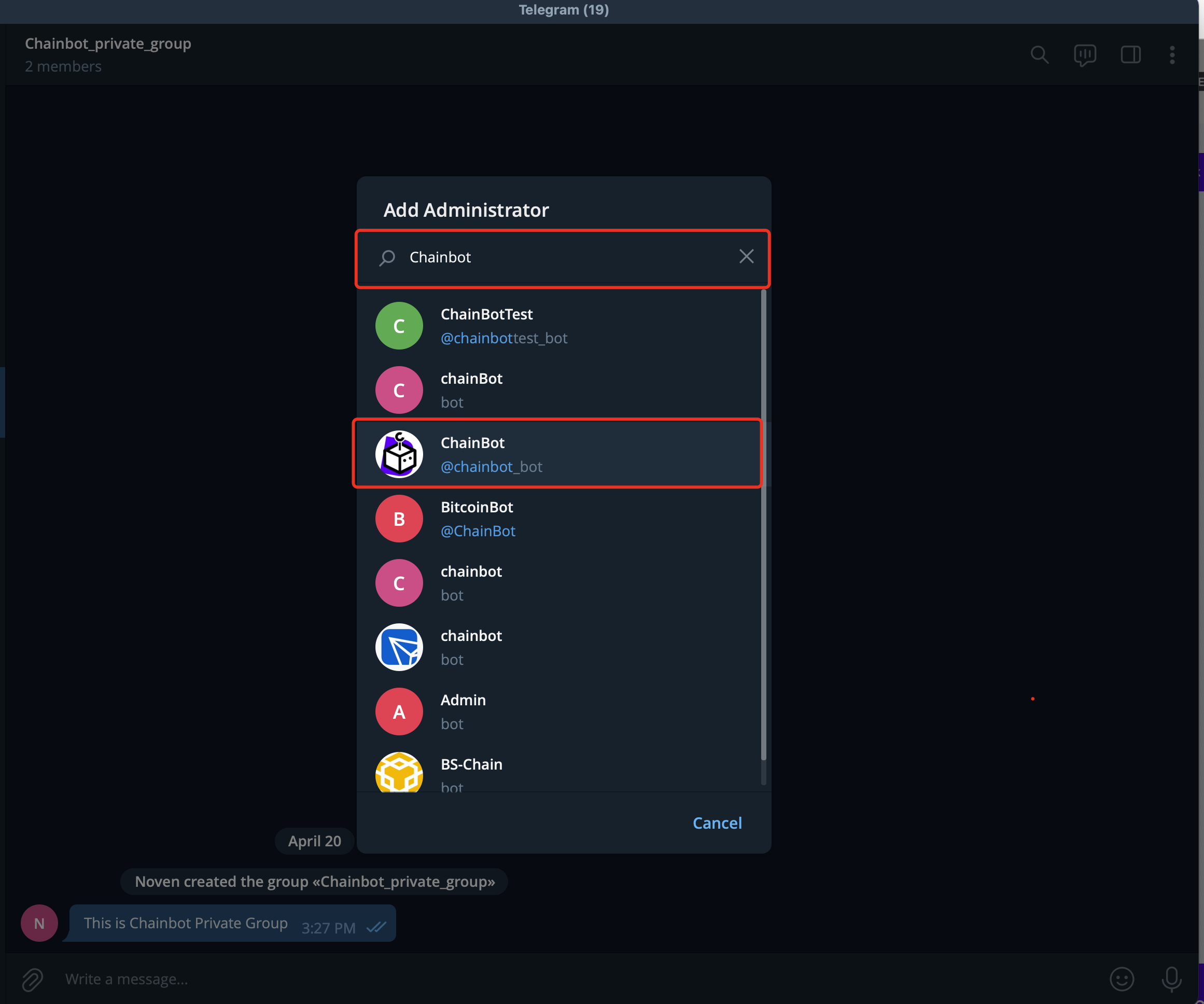
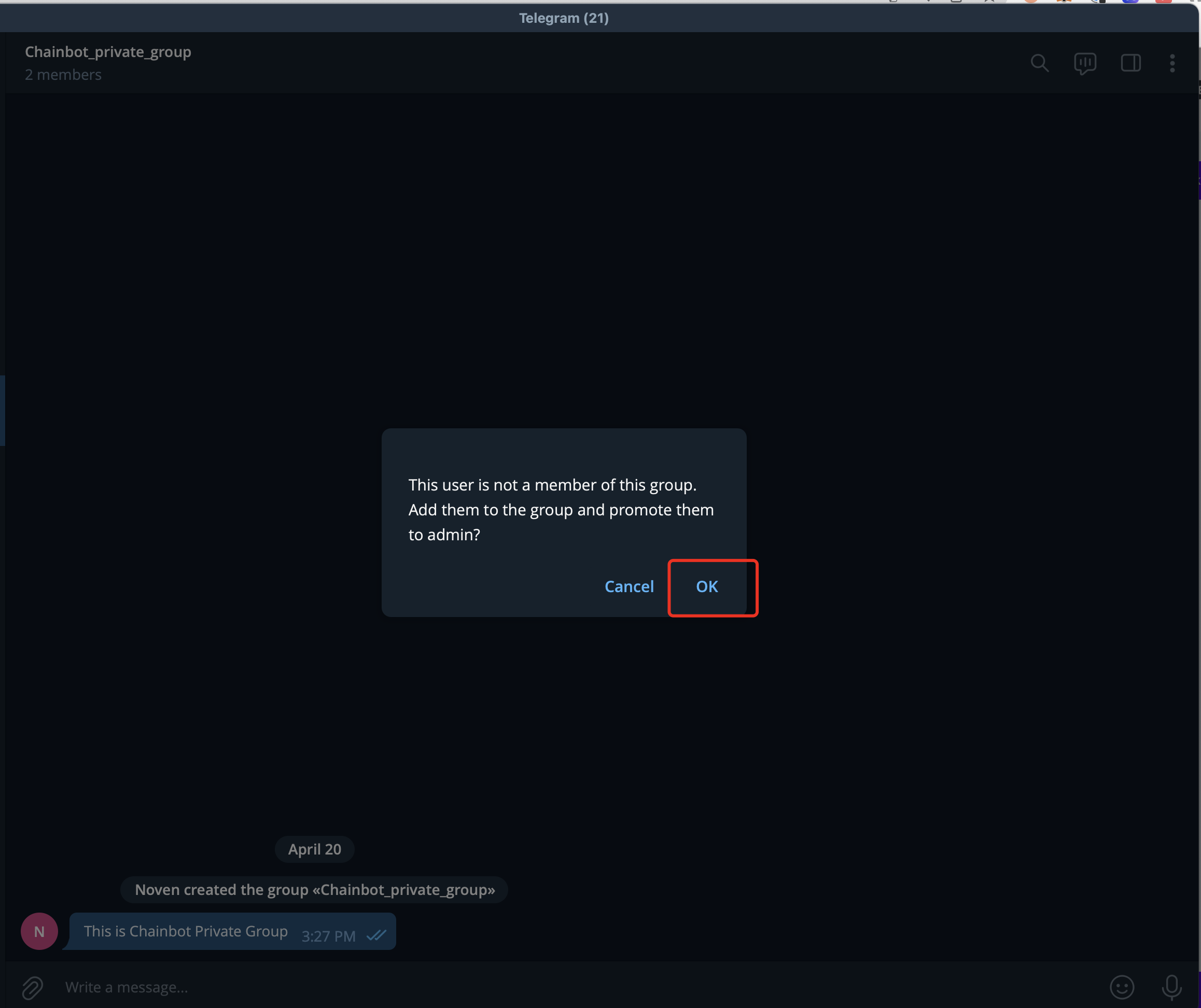
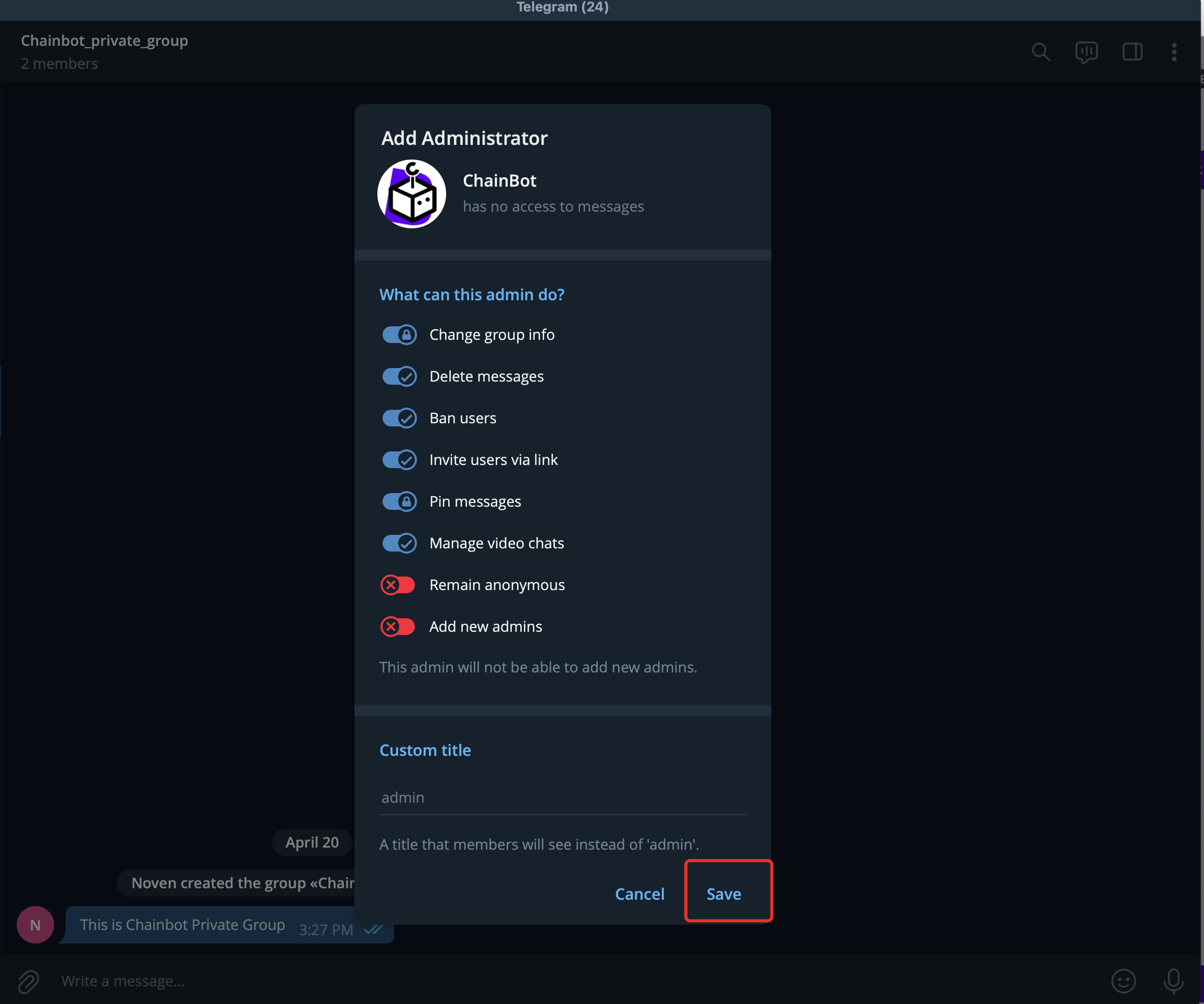 #### 确认Group的类型
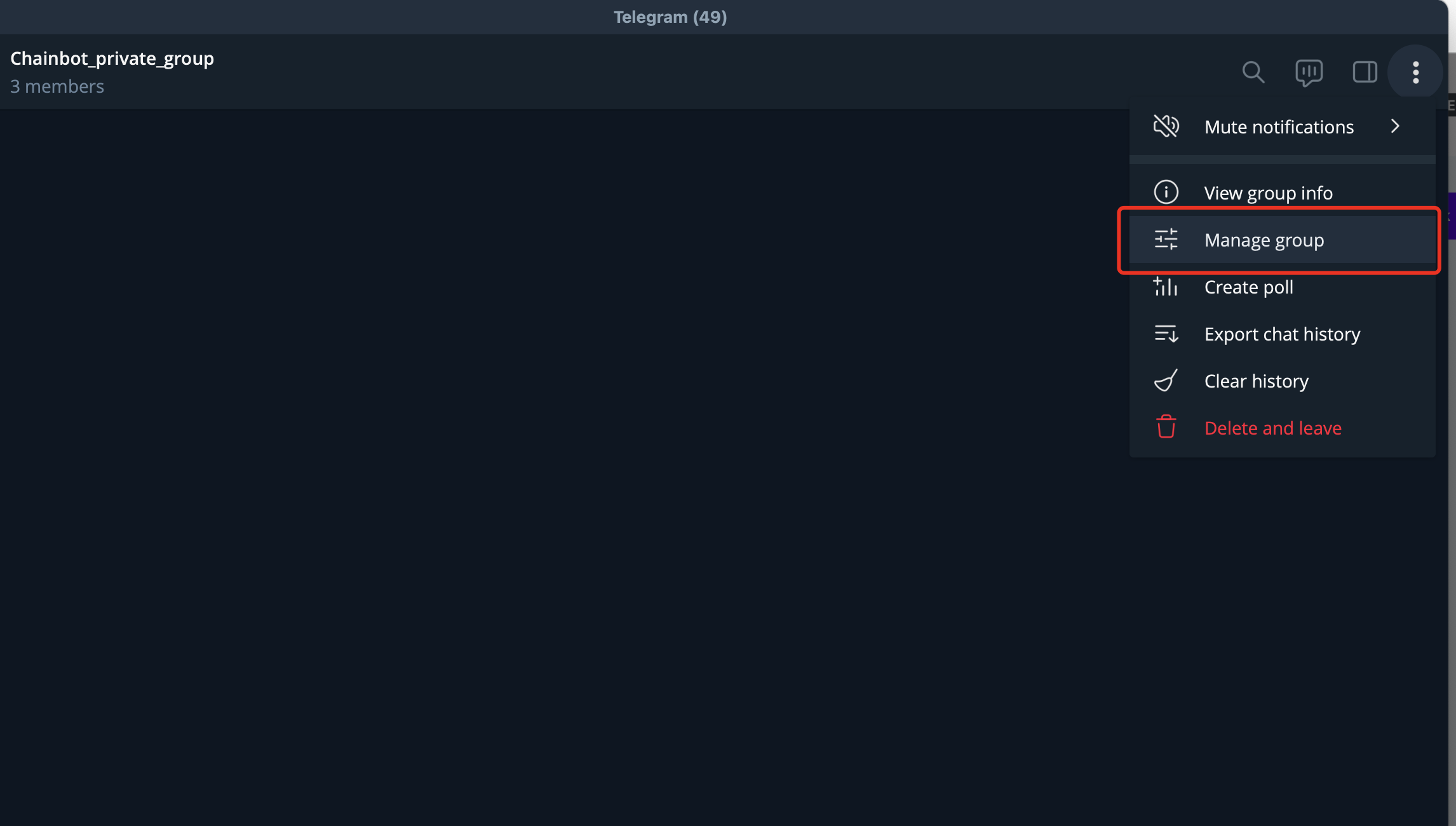
 #### 获取Chat ID或Group Name
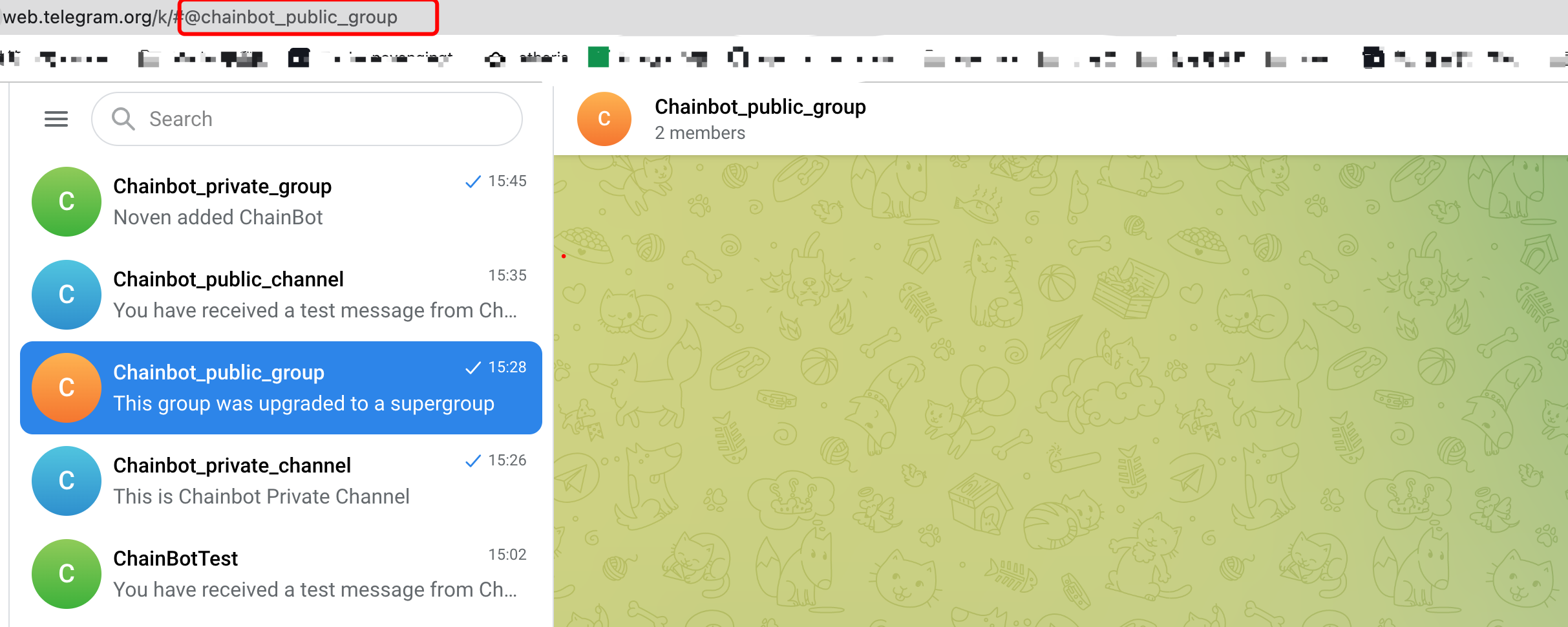
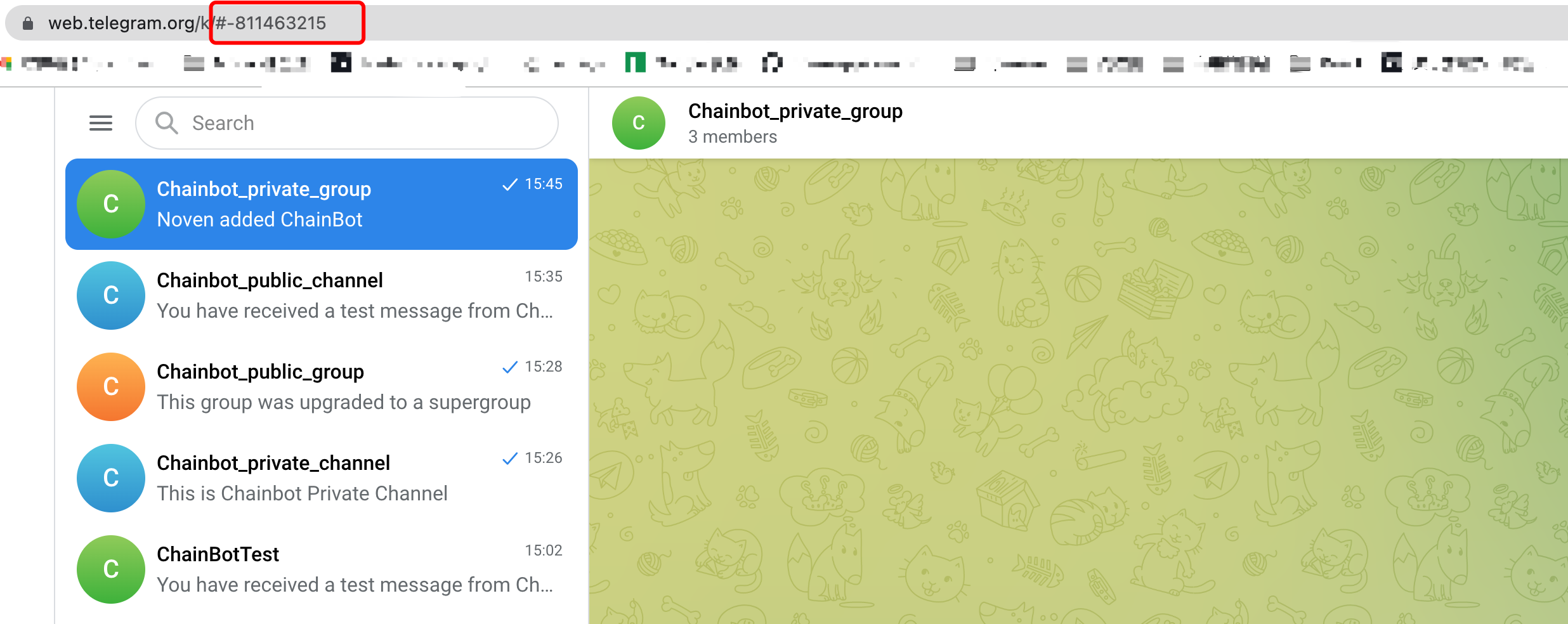
**需要在Web端打开Telegram,** [**https://web.telegram.org/**](https://web.telegram.org/)
从网页URL上获取Public Group的Group Name, 如 @chainbot\_public\_group
#### 获取Chat ID或Group Name
**需要在Web端打开Telegram,** [**https://web.telegram.org/**](https://web.telegram.org/)
从网页URL上获取Public Group的Group Name, 如 @chainbot\_public\_group
 从网页URL上获取Private Group的Chat ID, 如 -811463215
 #### 在Chainbot平台, 填写Chat ID或Group Name
 ### 如何设置 Channel?
1. 选择Chat Type为Channel (操作步骤与Group一致)。
2. 将Chainbot机器人拉入到Channel, **并设置为管理员** (操作步骤与Group一致)。
3. Channel分为Private(私有)和Public(公开)两类, **只能推送到Public类型的Channel,** 首先确认Channel的类型 (操作步骤与Group一致)
4. 如果是Public(公开) Channel, 需要填写带\*\*@符号的Channel Name,\*\* 如 @chainbot\_channel。(操作步骤与Group一致)
### 如何设置 Bot
1. 首先您需要创建一个自己的 Telegram Bot ,参考Telegram的[官方教程](https://core.telegram.org/bots/features#creating-a-new-bot)。
2. 使用 [BotFather](https://t.me/BotFather) 创建好属于自己的Bot后,您将看到这个 Bot 的 API Token。或者您可以在 /mybots 命令的菜单中再次选择刚刚创建的Bot查看此 API Token。
### 如何设置 Channel?
1. 选择Chat Type为Channel (操作步骤与Group一致)。
2. 将Chainbot机器人拉入到Channel, **并设置为管理员** (操作步骤与Group一致)。
3. Channel分为Private(私有)和Public(公开)两类, **只能推送到Public类型的Channel,** 首先确认Channel的类型 (操作步骤与Group一致)
4. 如果是Public(公开) Channel, 需要填写带\*\*@符号的Channel Name,\*\* 如 @chainbot\_channel。(操作步骤与Group一致)
### 如何设置 Bot
1. 首先您需要创建一个自己的 Telegram Bot ,参考Telegram的[官方教程](https://core.telegram.org/bots/features#creating-a-new-bot)。
2. 使用 [BotFather](https://t.me/BotFather) 创建好属于自己的Bot后,您将看到这个 Bot 的 API Token。或者您可以在 /mybots 命令的菜单中再次选择刚刚创建的Bot查看此 API Token。
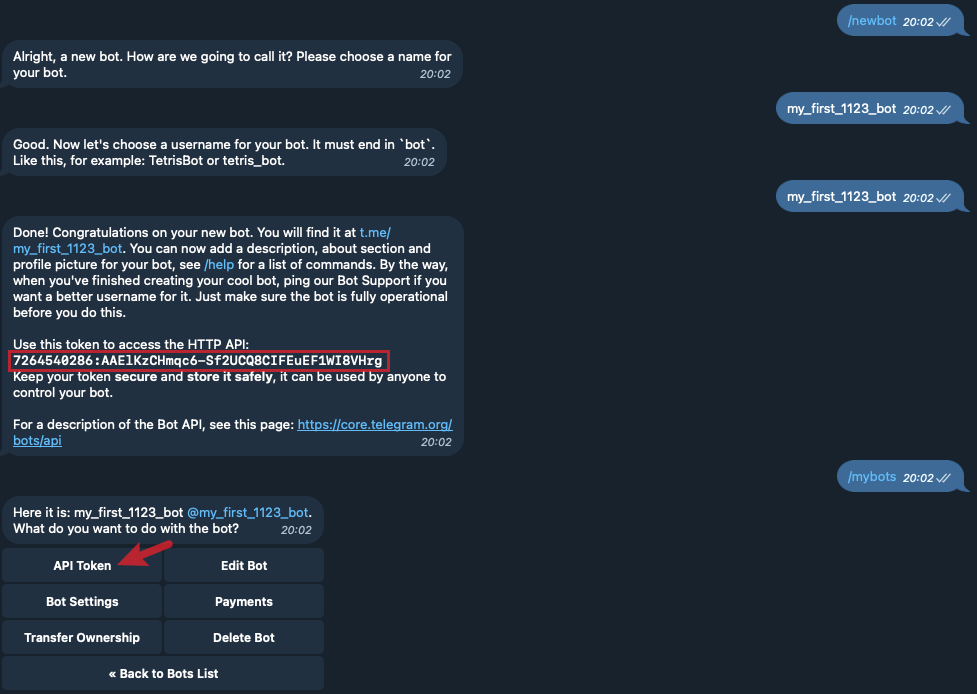 3. 点击复制这一段 API Token,回到ChainBot,Chat Type 选择"Bot",并将API Token粘贴在对应的输入框内。点击保存
 4. 保存成功后,您可以通过`/start` 和`/stop` 命令来控制您的Bot是否在所在聊天会话中推送消息。例如您可以将这个Bot拉入群组,并作为管理员身份在群组中发送 `/start` 命令,则该TG Bot将会在群里发送您的监控消息。
